

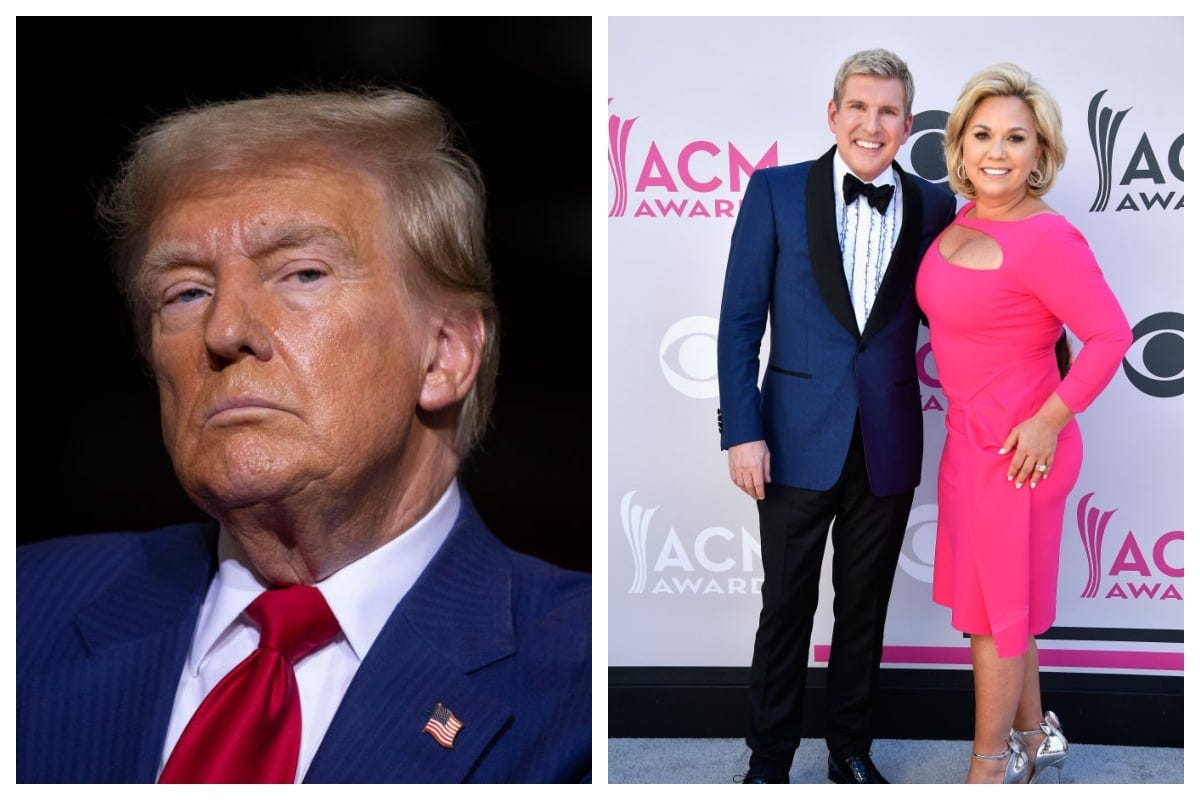
When Donald Trump pardoned reality TV stars Todd and Julie Chrisley last week, just months into their prison terms for tax fraud and bank fraud, it wasn’t just tabloid fodder. It raised a serious legal question with major implications: Does a presidential pardon erase the court-ordered $17.8 million in restitution they still owe?
Even more importantly: What happens when the Department of Justice, the very agency responsible for enforcing that restitution, is effectively controlled by the same man who issued the pardon?
Let’s break it all down.
What a Presidential Pardon Actually Does
A full presidential pardon under Article II of the Constitution erases the legal consequences of a federal conviction. It can restore civil rights, clear someone's record, and halt incarceration.
But one thing it typically does not erase is restitution.
Restitution is money owed to the victims of a crime, not a punishment levied by the government. In the Chrisley’s’ case, that means the $17.8 million they were ordered to pay is legally owed to the banks they defrauded, not to the state. Unless the language of Trump’s pardon explicitly cancels that debt (and we haven’t seen it publicly), the Chrisley’s are still on the hook.
Who Pays Now?
If the restitution stands:
Todd and Julie Chrisley must repay every dollar, unless they appeal to a court for relief and win, or unless…
If restitution is quietly canceled:
This is where things get concerning.
If Trump’s pardon included hidden language voiding the restitution, or if the DOJ under his influence simply decides not to enforce the restitution order, the banks could be left high and dry. That $17.8 million wouldn’t be paid by the Chrisley’s, and it wouldn’t be reimbursed by the government either. It would just vanish, absorbed as a loss by the institutions they defrauded.
DOJ Under Trump: What Happens Now?
This is the real wildcard. The DOJ is responsible for enforcing federal court orders, including restitution.
Right now, the Department of Justice is being reshaped under Trump’s second-term agenda. Key appointments, including to the Office of the Pardon Attorney and the Financial Litigation Units, are being filled with loyalists. That matters. Because:
The DOJ could deprioritize enforcement. They could simply choose not to pursue the Chrisley’s for the remaining balance.
The DOJ could reinterpret the pardon. If Trump’s appointees want to treat the pardon as covering restitution, even if that’s not clearly stated—they might do so without resistance.
Creditors would have to sue. If the DOJ stands down, the burden could shift to the defrauded banks to sue the Chrisley’s directly in civil court, a much harder and slower process.
This means Trump’s influence doesn’t just symbolically protect the Chrisley’s, it could functionally shield them from paying back what they stole.
What Are the Checks?
Legal scholars would argue that the president can’t unilaterally erase court-mandated payments to private victims. Pardons are not supposed to cancel third-party rights. If this ends up in court, it could trigger:
A constitutional challenge over the limits of pardon power.
Lawsuits by banks or third-party watchdogs.
Congressional scrutiny, especially if this becomes a broader pattern of “pardons plus debt relief” for allies or celebrities.
But here's the chilling part: If the executive branch refuses to enforce accountability, the burden of justice falls to those with the money, time, and power to sue. And in America, that’s not most people.
Final Take
Do the Chrisley’s still owe restitution?
Legally, yes—unless the pardon includes unusual language or the DOJ under Trump refuses to enforce it.
Will they actually have to pay?
That’s a political question now, not just a legal one.
The DOJ is no longer an independent check—it’s part of a larger machine. And when that machine starts deciding who has to pay back their crimes and who gets a free pass, we’re no longer talking about justice.
We’re talking about oligarchy.
To stay informed on what’s going on in congress, check out the Shit Congress Did Today Tracker